Understanding and Utilizing the Non-Religious Person Icon in Modern Design
The Significance of the Non-Religious Person Icon
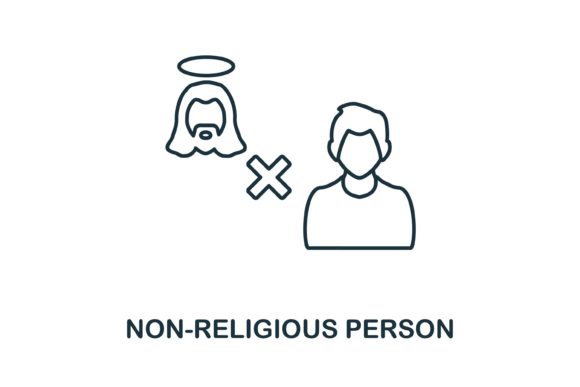
The Non-Religious Person Icon is a powerful symbol that represents individuals who do not adhere to any specific religious beliefs. This icon, often found in human rights collections, serves as a visual representation for a diverse group of people, including atheists, agnostics, and those who prefer not to be defined by religious affiliations. Its design is simple yet impactful, making it an essential element in various design projects.
Design and Symbolism
The Non-Religious Person Icon is typically depicted as a line drawing of a person with a neutral expression, sometimes with a small symbol or text indicating their non-religious stance. The simplicity of the design allows for easy integration into different contexts, from infographics to web designs. The icon's clean lines and straightforward appearance make it a versatile tool for designers looking to convey a message of inclusivity and respect for all belief systems.
In Infographics
Infographics are a popular way to present data and information visually. The Non-Religious Person Icon can be used in infographics to represent demographic data, such as the percentage of non-religious individuals in a given population. This helps in creating a more inclusive and accurate representation of the community, ensuring that all groups are acknowledged and respected.
In Web Design
Web design is another area where the Non-Religious Person Icon can be effectively utilized. Websites that aim to promote diversity and inclusion can use this icon to highlight sections or content related to non-religious perspectives. This not only enhances the user experience but also sends a clear message about the website's commitment to representing a wide range of viewpoints.
Enhanced Inclusivity
One of the primary advantages of using the Non-Religious Person Icon is its ability to enhance inclusivity. By visually acknowledging non-religious individuals, designers and organizations can create a more welcoming and representative environment. This is particularly important in today's diverse society, where inclusivity is a key value.
Clear Communication
The Non-Religious Person Icon also aids in clear communication. It provides a quick and easily recognizable symbol that can be understood at a glance. This is especially useful in contexts where clarity and brevity are crucial, such as in infographics or on websites with limited space.
Respectful Representation
When using the Non-Religious Person Icon, it is important to ensure that the representation is respectful and accurate. Avoid using the icon in a way that could be perceived as stereotyping or marginalizing. Instead, use it to promote understanding and respect for all belief systems.
Contextual Relevance
Consider the context in which the Non-Religious Person Icon will be used. While it is a versatile symbol, it may not be appropriate in every situation. Ensure that the use of the icon aligns with the overall message and purpose of the design project.
File Formats Available
To facilitate easy use and integration, the Non-Religious Person Icon is available in multiple file formats, including EPS, JPG, AI, and SVG. These formats cater to different needs and preferences, whether you are working on a print design, a digital project, or a web-based application.
Ease of Editing and Customization
The Non-Religious Person Icon is designed to be easily editable and customizable. With vector graphics, you can scale the icon to any size without losing quality. Additionally, the icon can be modified to fit specific design requirements, such as changing colors or adding additional elements.
Conclusion
The Non-Religious Person Icon is a valuable and meaningful symbol that can be used to enhance inclusivity and clarity in various design projects. By understanding its significance, practical applications, and considerations for use, designers and organizations can effectively incorporate this icon to create more representative and respectful visual communications.